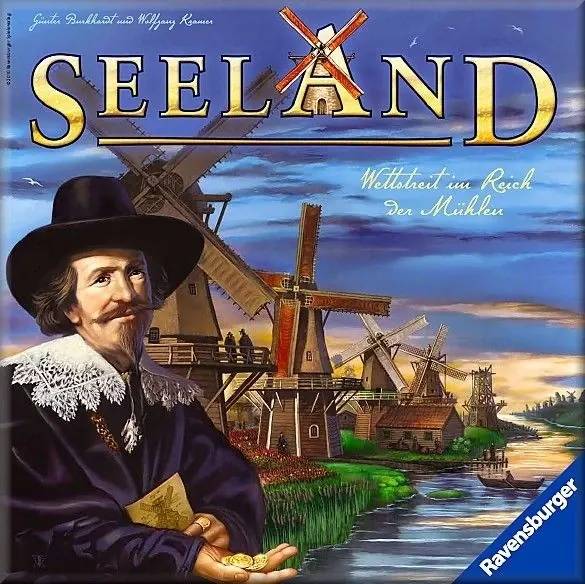
Seeland
- Players
- 2-4
- Best withThe player count this game plays best at.
- 2 players
- Play timeHow long a full game runs once everyone knows the rules.
- 60 min
- AgeThe minimum age printed by the publisher.
- 9+
- ComplexityHow demanding the rules are, from 1 (very light) to 5 (very heavy).
- 2.3 / 5
- Year
- 2010
About the game
Seeland is a tile-placement and rondel game set in 17th-century Zeeland, where 2-4 players work to reclaim land from the sea and build a prosperous province. A rotating rondel controls which seed and windmill tiles are available each turn, and placing windmills next to seed tiles or hidden island tiles triggers scoring and reveals. Surrounding a windmill with at least two types of seed scores points, with a bonus for gathering all three crop types, while revealing a farm tile grants an extra turn. The game ends once windmill or seed tile supplies run low, and players tally up their final scores from the accumulated tile placements. It's a moderate-weight economic and farming game built around careful tile and resource planning.
Hobbli's Notes
Hobbli's team likes Seeland for its distinctive rondel-driven tile market: it's a clever way to control resource availability that feels different from typical worker-placement or auction systems. The land-reclamation theme is understated but ties in nicely with the tile-flipping and windmill-surrounding mechanics. It rewards players who plan several turns ahead to set up good windmill placements. It's a satisfying mid-weight euro for groups ready to move past entry-level strategy games.
What we like
- Unique rondel mechanism controls tile availability in an engaging way.
- Satisfying land-reclamation tile-laying puzzle.
- Rewards planning windmill placement for bonus scoring.
- Moderate complexity suits gamers moving up from lighter titles.
- Low downtime keeps turns moving briskly.
Keep in mind
- The land-reclamation theme may feel dry for narrative-focused players.
- The rondel mechanic requires an initial learning curve.
- Direct player interaction is fairly limited.
- Scoring depends on careful adjacency planning that can feel fiddly.
Who it's for
Good for strategy-minded players aged 9+ in groups of 2-4 who enjoy tile-placement and resource-management euro games.