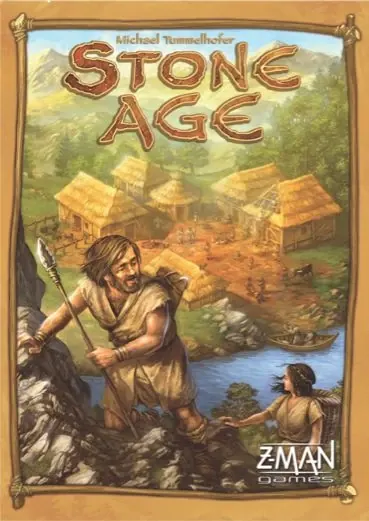
Stone Age
- Players
- 2-4
- Best withThe player count this game plays best at.
- 4 players
- Play timeHow long a full game runs once everyone knows the rules.
- 90 min
- AgeThe minimum age printed by the publisher.
- 10+
- ComplexityHow demanding the rules are, from 1 (very light) to 5 (very heavy).
- 2.5 / 5
- Year
- 2008
About the game
Stone Age is a classic worker-placement game where players guide a prehistoric tribe, sending tribe members to hunt, gather wood and stone, mine gold, or visit the trading hut and civilization cards. Balancing resource gathering against feeding your growing population is the game's central tension: too few resources at feeding time means losing tribe members or points. With straightforward rules and satisfying dice-based resource gathering, it has become a beloved entry point into the worker-placement genre. Its blend of luck and planning appeals to both new and veteran euro gamers.
Hobbli's Notes
Stone Age is often cited as one of the friendliest worker-placement games to teach, thanks to its clear, thematic actions and the simple but tense food-management puzzle. The dice-rolling for resource gathering adds a welcome bit of luck that keeps things light without undermining the strategic placement decisions. It's a slightly older design now, so some newer euro games offer tighter mechanisms, but Stone Age's approachable charm and solid production values have kept it a mainstay.
What we like
- Approachable worker-placement rules make it a great genre entry point.
- Food management adds satisfying tension to resource gathering.
- Dice-based resource collection adds light luck without overwhelming strategy.
- Attractive, thematic prehistoric art and components.
- Well-balanced for both families and experienced gamers.
Keep in mind
- Can suffer from some downtime waiting for other players' turns.
- Dice luck may frustrate players who prefer pure strategy.
- Somewhat dated compared to newer worker-placement designs.
Who it's for
Great for families and newer strategy gamers ages 10 and up, playing in groups of two to four.