Lucky Numbers
- Players
- 1-4
- Best withThe player count this game plays best at.
- 3 players
- Play timeHow long a full game runs once everyone knows the rules.
- 20 min
- AgeThe minimum age printed by the publisher.
- 8+
- ComplexityHow demanding the rules are, from 1 (very light) to 5 (very heavy).
- 1.1 / 5
- Year
- 2012
About the game
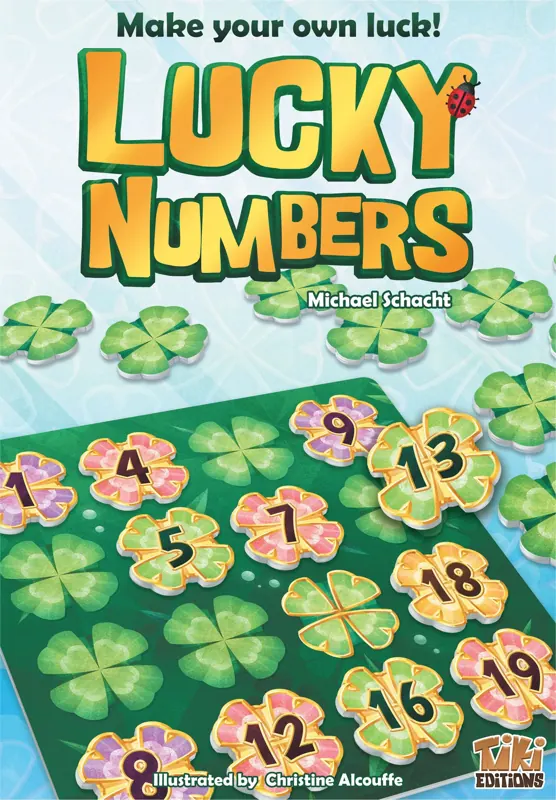
Lucky Numbers challenges players to fill a 4x4 grid with numbered tiles drawn at random, all while obeying a strict rule: each tile must be higher than any tile above or to its left, and lower than any tile below or to its right. On each turn, players draw a face-down tile or take a face-up discarded one, then place it, swap it into the grid, or discard it: trying to outmaneuver the shifting constraints faster than their opponents. Whoever fills their grid first wins, with a tournament mode and a 40-puzzle solo variant extending its replayability.
Hobbli's Notes
Hobbli's team likes Lucky Numbers as a tidy little puzzle that's easy to teach yet has real bite in its placement constraints: deciding whether to place, swap, or discard a tile is trickier than it first appears. The included solo mode with 40 puzzles is a nice touch for players without a group handy. It's a light, quick game that works well as a warm-up or cooldown around heavier titles. A solid pick for puzzle-minded players of any age.
What we like
- Simple grid-ordering puzzle that's quick to teach.
- Fast 20-minute playtime suits short sessions.
- Includes a 40-puzzle solo mode for single-player play.
- Meaningful decisions between placing, swapping, and discarding tiles.
- Tournament variant adds structure for repeated group play.
Keep in mind
- Luck of the tile draw can limit strategic control.
- Abstract number theme offers little thematic flavor.
- Can feel repetitive after many consecutive plays.
- Limited direct player interaction during the main grid-filling phase.
Who it's for
Good for puzzle and abstract game fans, families included, ages 8 and up, playable solo or in groups up to 4.