About the game
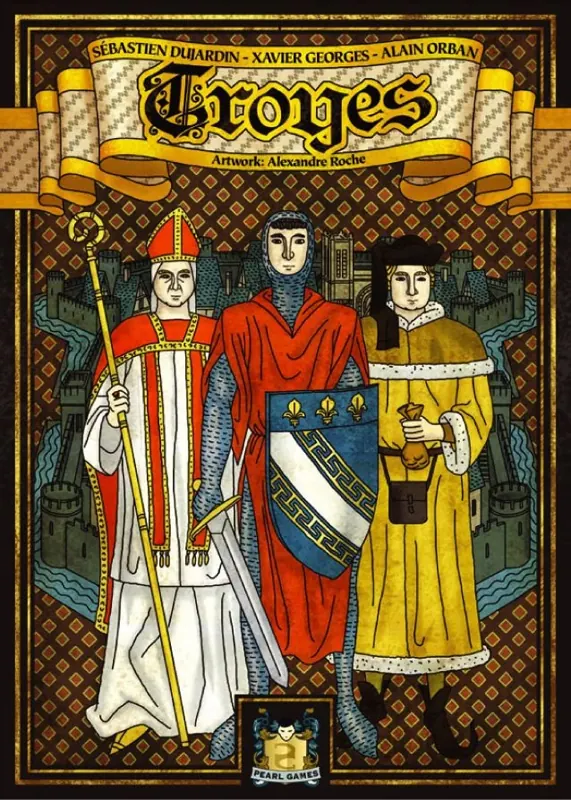
Troyes reimagines the history of this French city through a unique dice-as-workers system representing the population's religious, military, and civil labor. Players roll and allocate colored dice to work on the cathedral, fend off misfortune, or bustle about town, while a hand of event and action cards shapes strategy. Cash can even be used to hire opponents' dice, adding a sly layer of negotiation to the worker allocation puzzle. It's a distinctive euro that blends dice manipulation with card-driven strategy across four centuries of history.
Hobbli's Notes
Troyes stands out for turning dice into a resource-management puzzle rather than a luck-driven mechanic, which appeals strongly to euro-gaming purists. The ability to rent out or hire opposing players' dice creates fun, understated interaction. It rewards careful planning around event cards and hidden victory points. We recommend it to fans of mid-to-heavy euros looking for something mechanically distinct from typical worker placement fare.
What we like
- Dice-as-workers mechanism is fresh and distinctive.
- Hiring opponents' dice adds clever indirect interaction.
- Well-supported solo variant in modern printings.
- Hidden victory points reward careful long-term planning.
Keep in mind
- Dice allocation puzzle can be fiddly to learn initially.
- Event cards introduce swingy moments some euro purists dislike.
- Older editions lack the solo rules found in later printings.
Who it's for
Great for euro gamers who enjoy dice allocation and hidden scoring, ages 12 and up, in groups of one to four.