Best Strategy Board Games: 10 Top Picks for Every Level

Strategy board games reward planning over luck: you build an engine, outmaneuver your rivals and watch a long-term plan pay off. The hard part is choosing, because the genre runs from tidy two-hour puzzles to games that need a whole evening and a patient group.
To keep this list useful, we only picked established strategy games, every one of them on the shelves for at least five years, and ranked them by how much the community appreciates them. That keeps out new releases still waiting for a verdict. Each pick below tells you how many players it suits, how long it takes, how hard it is to learn and who should skip it.
Strategy board games at a glance
| Game | Players | Best with | Play time | Learning curve |
|---|---|---|---|---|
| Brass: Birmingham | 2–4 | 4 | 120 min | Demanding, steep to learn |
| Ark Nova | 1–4 | 2 | 150 min | Demanding, many cards to learn |
| Dune: Imperium | 1–4 | 3 | 120 min | Moderate, takes a game to click |
| Gaia Project | 1–4 | 3 | 150 min | Very demanding, for experts |
| Spirit Island | 1–4 | 2 | 120 min | Very demanding, steep to learn |
| Terraforming Mars | 1–5 | 3 | 120 min | Moderate, slow first game |
| The Castles of Burgundy | 2–4 | 2 | 90 min | Moderate, easy to pick up |
| Great Western Trail | 2–4 | 3 | 150 min | Demanding, lots of setup |
| Scythe | 1–5 | 4 | 115 min | Moderate, long rulebook |
| Lost Ruins of Arnak | 1–4 | 3 | 120 min | Moderate, a good first step |
New to the genre? Start with The Castles of Burgundy or Lost Ruins of Arnak. Want a demanding game with a lot of interaction? Look at Brass: Birmingham. Playing mostly alone or with one other person? Ark Nova and Spirit Island shine at low player counts.
The ranking
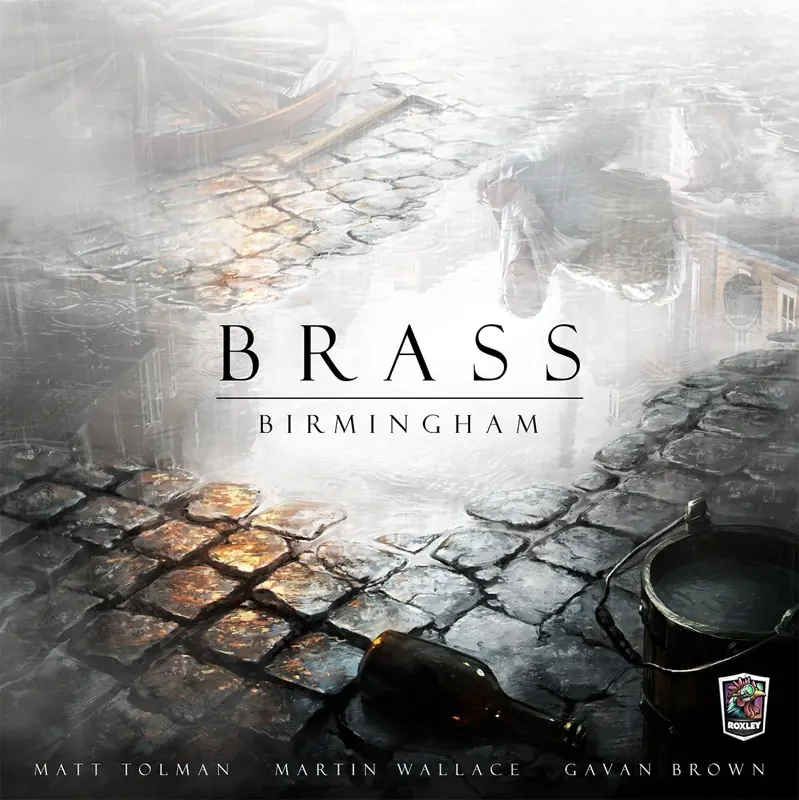
1. Brass: Birmingham
The best-appreciated strategy game on this list. You run competing industrial businesses during the Industrial Revolution, building canals and railways, developing industries and selling goods across two eras. The economy is tightly interlocking, so careful timing counts for more than luck, and variable setups keep it fresh.
It plays 2–4 players, is best with 4, and takes about two hours. It is a demanding game with a steep learning curve and plenty of downtime between turns.
Pick it if you love deep economic planning. Skip it if your group is new to strategy games: early mistakes are hard to recover from.
2. Ark Nova
You design and run a modern zoo, building enclosures, housing animals and funding conservation projects around the world. Each turn uses five action cards whose power shifts depending on where they sit in your hand, and over 250 unique cards mean no two games play out the same way.
It plays 1–4 players, is best with 2, and takes about two and a half hours. It has an excellent solo mode, but the dense iconography makes the first game slow.
Pick it if you enjoy engine-building with a strong theme, especially as a two-player game. Skip it if you want a lot of direct interaction, since players mostly compete indirectly.
3. Dune: Imperium
Deck building meets worker placement in the world of Frank Herbert's Dune. You send agents to contested spaces while building a deck that fuels your military and political power. Combat and alliances create real interaction, and the different leaders make every game feel fresh.
It plays 1–4 players, is best with 3, and takes about two hours. It is easier to learn than the most demanding games on this list, but not a good first game for complete beginners.
Pick it if you want a strategy game with a strong theme and clever card play. Skip it if card luck bothers you or you prefer shorter evenings at four players.
4. Gaia Project
The most demanding game on this list. Fourteen asymmetric factions terraform planets and expand across a modular galaxy, developing six areas of technology that unlock new abilities along the way. It is a spiritual successor to Terra Mystica and rewards players who enjoy optimizing every move.
It plays 1–4 players, is best with 3, and takes about two and a half hours. The rules are very demanding, so it suits experienced players only.
Pick it if you are a seasoned euro gamer who loves a deep puzzle. Skip it if you want a quick game or a lot of player interaction.
5. Spirit Island
A cooperative strategy game in which powerful island spirits defend their home from colonizing invaders. Each spirit plays very differently, and simultaneous card play keeps downtime low. The escalating difficulty gives it real tension.
It plays 1–4 players, is best with 2, and takes about two hours. It is one of the steepest learning curves here and can feel punishing if the invaders get ahead.
Pick it if you like cooperative games with real depth and replayability. Skip it if your group is new to cooperative games or dislikes dense rules.
6. Terraforming Mars
You lead a corporation racing to make Mars habitable by raising its temperature, oxygen and ocean coverage. Hundreds of project cards let you build an engine that grows stronger each generation, and tile placement adds a race for the best spots.
It plays 1–5 players, is best with 3, and takes about two hours. It has a well-regarded solo mode, though it can start slowly and some cards are clearly stronger than others.
Pick it if you enjoy watching an engine snowball. Skip it if you dislike slow starts or want lots of direct conflict.
7. The Castles of Burgundy
A tile-placement puzzle set in medieval France. Each round you roll dice and use the results to pick and place tiles on your own board, trading goods and working silver mines. Turns are quick, so downtime stays low even though there is real depth.
It plays 2–4 players, is best with 2, and takes about 90 minutes. It is moderately complex and works for mixed groups, from families to strategy fans.
Pick it if you want an approachable euro game you can replay endlessly. Skip it if dice luck or limited interaction bother you.
8. Great Western Trail
You drive cattle from Texas to Kansas City again and again, improving your herd along the way by hiring cowboys, craftsmen and engineers. It mixes deck building with route building, and buildings along the trail benefit everyone who passes through them.
It plays 2–4 players, is best with 3, and takes about two and a half hours. There is a lot of setup and rules overhead, and games stretch with four players.
Pick it if you love optimizing a growing machine over a long game. Skip it if you want something quick to set up.
9. Scythe
An alternate 1920s Europa where five asymmetric factions race to control a mysterious Factory. You build an engine of farming, recruiting and mech-powered conquest on a beautifully illustrated map. No player is ever eliminated, so everyone stays engaged until the end.
It plays 1–5 players, is best with 4, and takes just under two hours. The rulebook has a steep learning curve and downtime grows at higher player counts.
Pick it if you like area control and asymmetric factions. Skip it if you prefer pure economic games without combat.
10. Lost Ruins of Arnak
Explorers uncover lost artifacts and ancient guardians on an uncharted island. The game cleverly fuses deck building with worker placement, and your cards place workers directly onto the exploration board as you dig deeper into the island's secrets.
It plays 1–4 players, is best with 3, and takes about two hours. It is moderately complex, and a good first step into strategy for anyone who has played simpler games.
Pick it if you want a fresh, approachable strategy game with a solo mode. Skip it if you dislike luck in early card draws or feel games get formulaic after many plays.
How to choose your strategy game
Start with how much time your group has. For a 90-minute evening, The Castles of Burgundy is the easiest fit. For a long, serious night, Brass: Birmingham, Great Western Trail and Gaia Project are the most rewarding. If you mostly play as a pair, Ark Nova, Spirit Island and The Castles of Burgundy are all best with two.
Then think about interaction. Scythe, Dune: Imperium and Brass: Birmingham put players in direct competition, while Ark Nova, Gaia Project and The Castles of Burgundy are closer to optimizing your own board.
If you want something simpler to warm up, see our guide to the best board games for families or the best board games of all time. To compare more strategy games by player count, play time or price, browse the full Hobbli catalog and filter by what you need.