Princes of the Renaissance
- Players
- 3-6
- Best withThe player count this game plays best at.
- 5 players
- Play timeHow long a full game runs once everyone knows the rules.
- 180 min
- AgeThe minimum age printed by the publisher.
- 12+
- ComplexityHow demanding the rules are, from 1 (very light) to 5 (very heavy).
- 3.5 / 5
- Year
- 2003
About the game
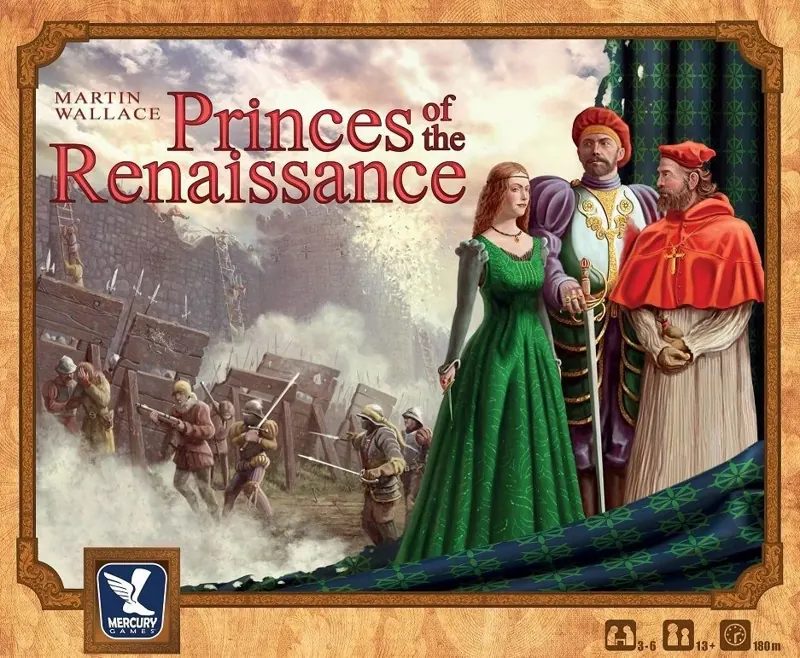
Princes of the Renaissance casts players as minor Italian princes maneuvering for influence over five great cities - Venice, Milan, Florence, Rome, and Naples - during the height of the Renaissance. Through auctions and bidding, players gain interests in city tiles representing famous historical figures, each granting unique bonuses. Wars between cities are resolved by bidding to command their armies, turning influence into gold and victory points. Treachery tiles and open negotiation add a layer of political maneuvering throughout. Designed by Martin Wallace, it supports 3 to 6 players in a substantial 180-minute session.
Hobbli's Notes
Princes of the Renaissance is a dense, negotiation-heavy auction game from Martin Wallace that rewards players who enjoy reading the table and manipulating outcomes indirectly. The bidding-for-war mechanic is a clever way to fold conflict into an economic game without dice or combat rolls. It demands a long time commitment and a group comfortable with open negotiation and betrayal. A rewarding, if heavy, classic for fans of historical economic strategy.
What we like
- Rich auction and bidding system tied directly to city warfare.
- Deep negotiation and treachery mechanisms create real political play.
- Designed by acclaimed designer Martin Wallace.
- Supports up to 6 players for a lively multiplayer experience.
Keep in mind
- Long 180-minute playtime demands serious commitment.
- Heavy complexity and high downtime can frustrate newer players.
- Relies on table talk and negotiation, which not all groups enjoy.
Who it's for
Best suited to experienced strategy gamers (ages 14+) who enjoy long auction and negotiation-driven games with a historical theme.